Americans have always had a hard time sitting still.
Long before there were highways, RV parks, or the robotic GPS voice telling you to turn left in 500 feet, people were loading up everything they owned and heading off to somewhere new. The vehicle may have changed over the years. The instinct never did.
Here’s a quick look at how America’s love affair with the open road got started; and how it eventually led to the rolling homes we know and love today.
The Original RV: The Conestoga Wagon
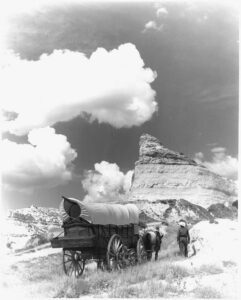
The original rig. Conestoga wagons carried families west long before there were roads to drive on. (Photo: U.S. National Archives, Public Domain)
If you want to find the first American who said “let’s load up the rig and go,” you have to go all the way back to the 1700s. The Conestoga wagon was essentially the first mobile home in American history.
Families loaded everything they owned into these canvas-topped wooden boxes and headed west. There was a bed of sorts, storage, and a roof to keep the weather out. No hookups, no slideouts, definitely no air conditioning. Just the open road trail and whatever waited at the other end of it.
The spirit was exactly the same as it is today. The amenities, not so much.
The First Car Campers (1910s)
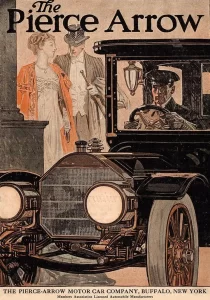 If you could afford a Pierce Arrow in 1910, you could afford to camp in style. Most people couldn’t. (Public Domain)
Once the automobile showed up, it didn’t take long for someone to think: can we camp in this??
As early as 1910, the wealthy were outfitting their cars for road trips. Pierce-Arrow built a touring car with a fold-down bed, a small kitchen, and even a toilet. It was the luxury RV of its day, and it cost about as much as a house.
Most folks couldn’t afford a Pierce-Arrow. But they could pack up a Model T and figure it out. And they did.
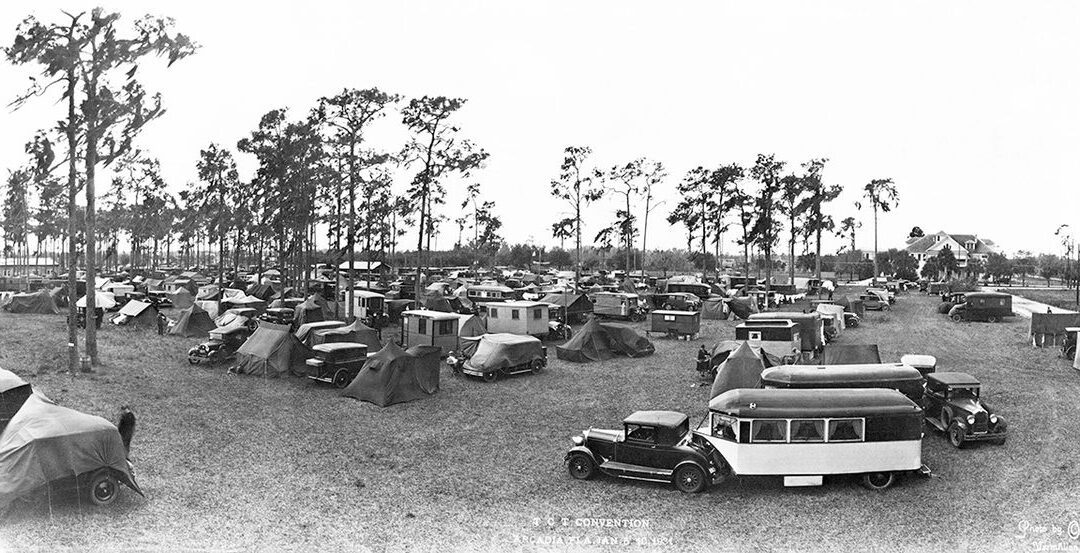
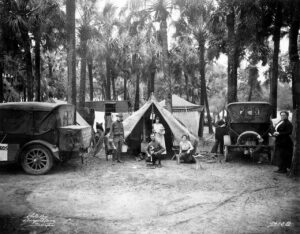 Car camping in Tampa, Florida — before there were campgrounds, there were just palm trees and determination. Photo by Burger Bros., Tampa. (Public Domain)
By the early 1920s, car camping had gone from novelty to a full-blown movement. People were loading tents and cookstoves onto their Tin Lizzies and heading out on roads that were barely more than dirt paths. They called themselves the Tin Can Tourists — named partly for their tin-can cars and partly for the canned goods they lived on.
They organized. They camped together. They built a community around the road. Sound familiar?
The First Slide-Out: The Telescoping Apartment (1916)
In 1916, someone looked at a small travel trailer and asked the question that still drives RV design today: what if it got bigger?
The Telescoping Apartment was the world’s first slide-out; a section of the living space that expanded outward to add room when you were parked. It was a solution so obvious in hindsight that it’s almost funny nobody thought of it sooner. Today, slide-outs are on nearly every rig on the road.
The Convention Scene: Tin Can Tourists Go Big (1920s)
By the late 1920s, the Tin Can Tourists were holding full-scale conventions. Hundreds of cars and trailers would gather in towns like Arcadia, Florida, forming temporary communities that looked a whole lot like modern RV parks…minus the electric hookups and Wi-Fi.
They had a handshake, a motto, and a membership ritual involving a tin can soldered to your radiator cap. These were people who took their road life seriously.
The Curtiss Aerocar: Fifth Wheel Pioneer (circa 1930)
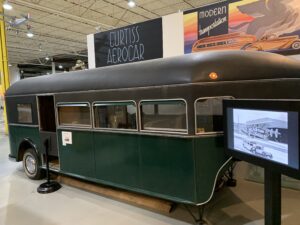
Glenn Curtiss made his name in aviation, one of the early pioneers of powered flight. But he also had a thing for luxury travel on the ground.
The Curtiss Aerocar was one of the first true fifth-wheel trailers: a sleek, roomy, self-contained unit that hitched to a tow vehicle in a way that distributed weight differently than traditional trailers. It set the template for the fifth-wheel design that millions of RVers still use today.
It also looked like it belonged in a Hollywood film, which didn’t hurt.
Photo: By VistaXL — Own work, CC BY-SA 4.0, via Wikimedia Commons
The Post-War Boom (1940s–50s)
After World War II, America was ready to move. Returning veterans, new highways, steady paychecks, and a whole lot of pent-up energy sent families streaming onto the roads in station wagons and travel trailers.
Airstream had been making trailers since the 1930s, but the post-war boom turned them into icons. The interstate highway system broke ground in 1956, and suddenly getting from here to there got a whole lot easier. RV parks started showing up across the country. The industry took off and never looked back.
The Counterculture Hits the Road (1960s–70s)

If the 1950s family road trip was about seeing America, the 1960s and 70s were about feeling it.
The VW van became the symbol of a generation that had decided the destination mattered less than the journey. Hippies, surfers, and free spirits loaded their Kombis with sleeping bags and headed wherever the road took them.
It wasn’t about comfort. It was about freedom, man. The van was the philosophy made mobile.
Going Big: The Wanderlodge Era (1970s–80s)
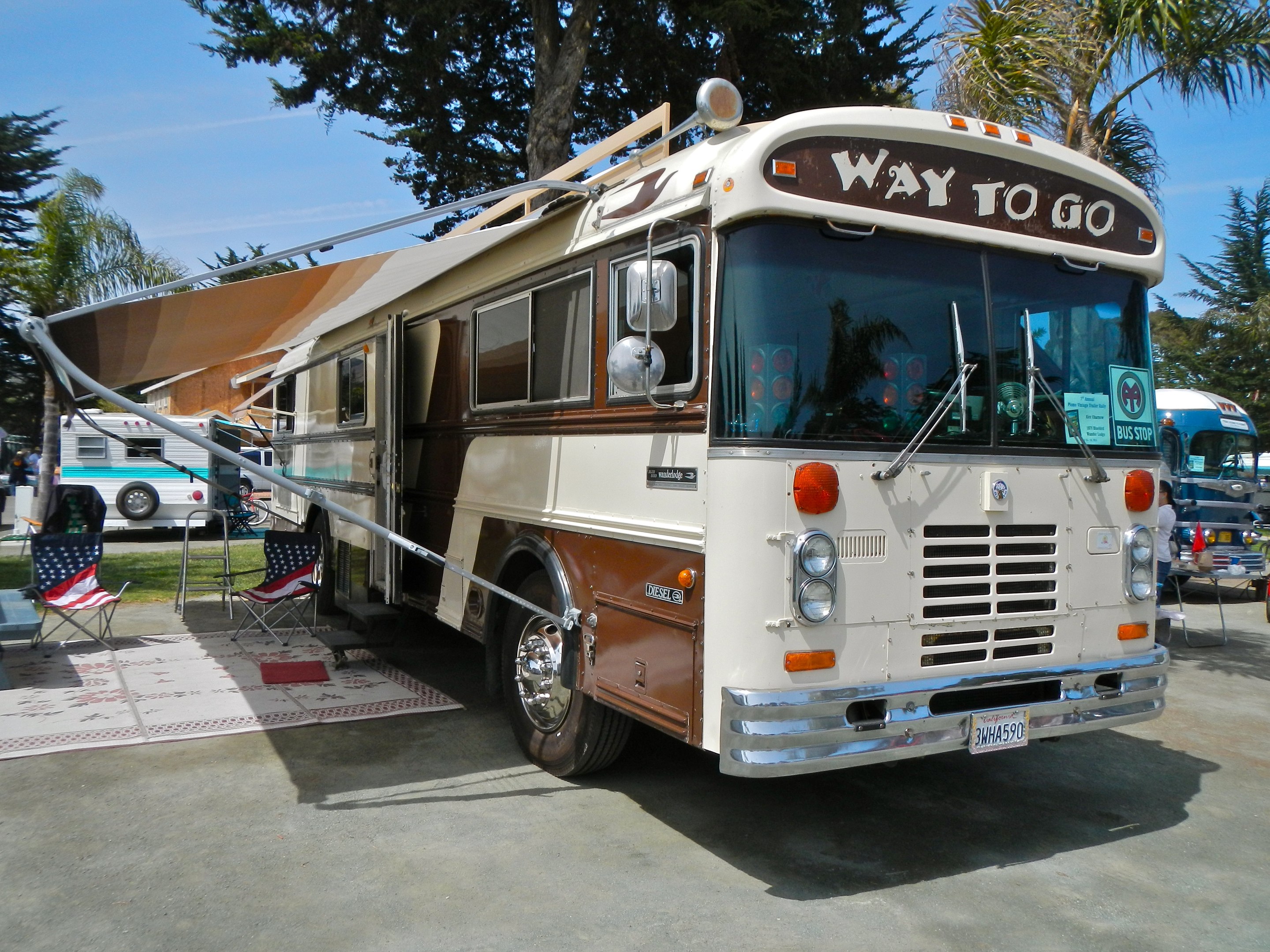
Not everyone wanted to rough it. By the 1970s and 80s, motorhomes had grown up, and gotten serious. The Blue Bird Wanderlodge was the gold standard: a full-length coach with real power, real amenities, and enough presence on the highway that people stopped to stare.
The sign on the front of that particular rig above pretty much says it all: Way to Go.
Photo: PunkToad from Oakland, US, CC BY 2.0, via Wikimedia Commons
The Modern Era: Full-Timers, Nomads & Snowbirds
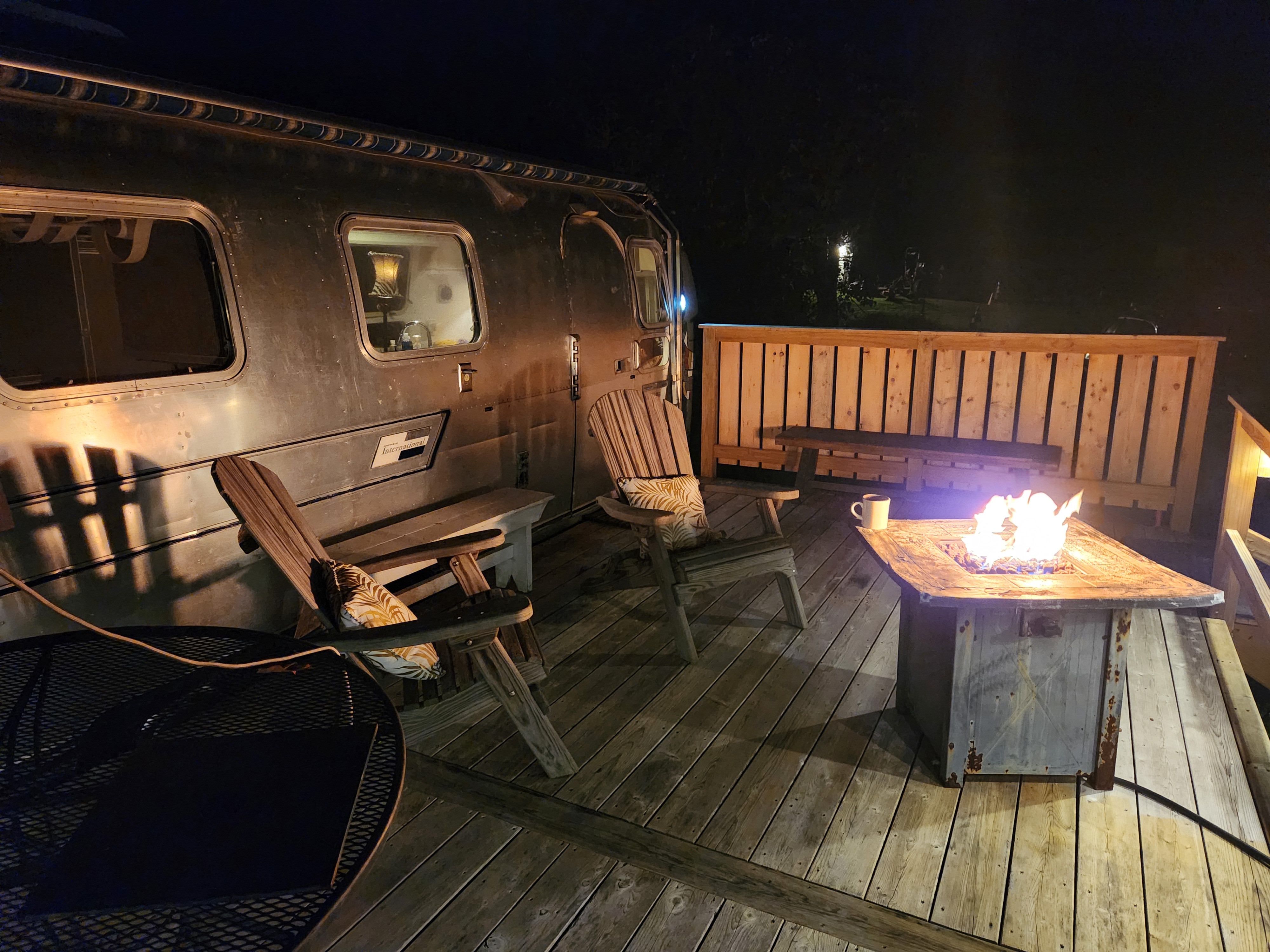
Today’s RV world is bigger, more diverse, and more connected than those early Tin Can Tourists could have imagined. Full-timers, weekend warriors, digital nomads, snowbirds, and retirees; all sharing the same roads and the same basic instinct. Go somewhere. See something. Live a little lighter.
Every January, thousands of van dwellers, nomads, and free spirits descend on Quartzsite, Arizona for the Rubber Tramp Rendezvous; a gathering that would have felt right at home in Arcadia, Florida in 1921. Different rigs, same instinct. The community never really went anywhere.
The rigs got nicer. The slide-outs multiplied. Satellite internet showed up. But the feeling of settling in for the night, fire winding down, with somewhere new just on the other side of the window, that part hasn’t changed a bit.
From Conestoga wagons to Airstream Internationals, the story of Americans and the open road is still being written. When your story brings you through Bryan, Texas, you can rest your shells with us.