
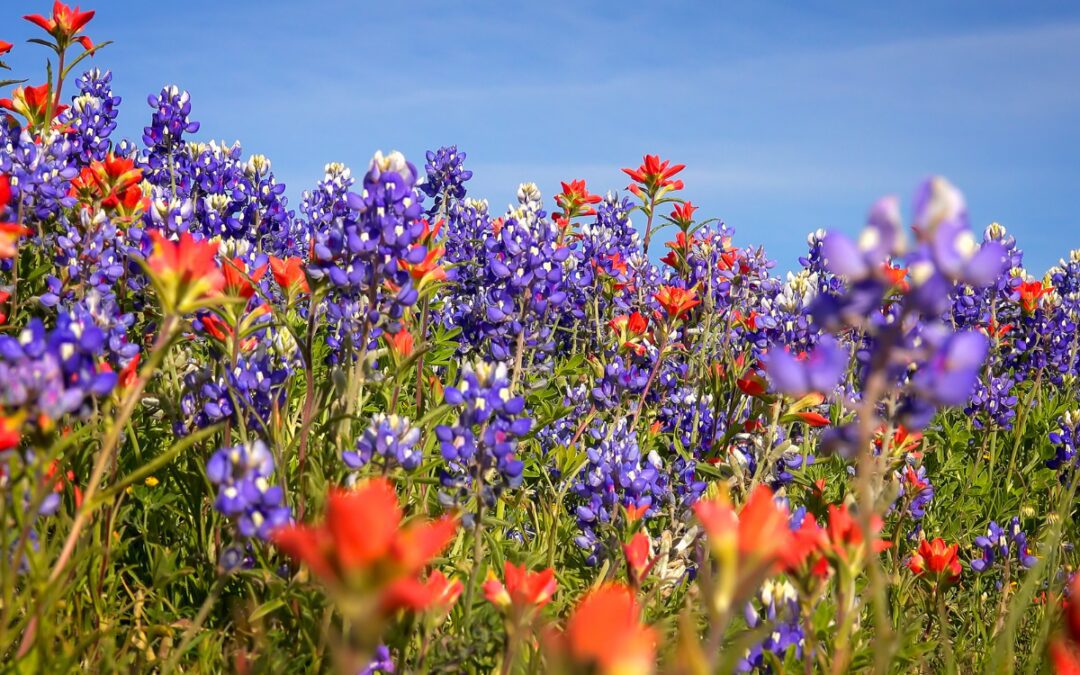
Every spring, something magical happens across Texas.
Fields that looked quiet and empty just weeks before suddenly burst into color. Bluebonnets begin to blanket roadsides, pastures, and parks, transforming the countryside into a sea of blue that draws photographers, road-trippers, and nature lovers from all over the country.
While Ennis holds the “Bluebonnet Capitol of the World” title, here in Bryan and College Station, we’re lucky to be surrounded by some beautiful wildflower country ourselves. While the blooms only last a few weeks, the experience of seeing them in full color is something every Texas traveler should enjoy at least once.
However, with the growing popularity of wildflower photography, it’s also more important than ever to enjoy them responsibly.
Before you grab your camera and head out to chase those famous Texas blooms, here’s what to know about when to go, where to look, and how to protect the wildflowers for everyone.
When Does Bluebonnet Season Peak in Texas?
Wildflower season in Texas typically begins in March, with peak blooms arriving from mid-April through early June depending on the weather conditions. Given the dry fall and colder than average winter, the “carpet-like” display is not anticipated, but you can find several scattered patches, particularly in areas with better runoff.
Bluebonnets themselves usually reach their peak during the first half of April. Alongside bluebonnets, you’ll often see other Texas favorites like:
- Indian paintbrush
- Indian blanket
- Coreopsis
- Winecup
- Evening primrose
Together, they create the vibrant wildflower displays that make spring road trips in Texas so special.
Where to See Bluebonnets Near Bryan & College Station
You don’t have to travel far from Bryan to find beautiful wildflower displays. Some great areas to explore include:
Lake Somerville – Birch Creek Area
Birch Creek Park and surrounding roads often feature colorful wildflower displays along the shoreline and nearby countryside.
Washington-on-the-Brazos State Historic Site (Navasota)
Wide open fields and historic trails make this one of the most scenic places to photograph Texas wildflowers.
Brenham & Chappell Hill Area
Often considered some of the most famous bluebonnet viewing areas in Texas, these rolling countryside roads are well worth the short drive.
Bush Library Area (College Station)
Along Barbara Bush Drive you can often find smaller but beautiful patches of wildflowers close to town.
Lake Bryan to Smetana Road Area
Quiet country roads here can reveal some unexpected bluebonnet patches without the crowds.
Highway 6 near Navasota & Highway 47
Roadside blooms often appear along these highways during peak season.
Boonville Heritage Park
A peaceful spot with walking paths and open areas that can fill with wildflowers during the spring months.
If you’d like even more viewing spots, you can also check out our previous guide:
Bloom & Wander: Best Bluebonnet Viewing Near Bryan/College Station.
Tips for Taking Beautiful Bluebonnet Photos
Wildflowers might look effortless in photos, but capturing those postcard-perfect shots takes a little strategy.
Shoot During Golden Hour
The best lighting happens:
- Just after sunrise
- Just before sunset
The softer light enhances colors and reduces harsh shadows.
Get Low
Some of the most stunning wildflower photos happen at flower level. Try kneeling or placing your camera low to the ground to capture the flowers against the Texas sky.
Use Depth of Field Creatively
For sweeping fields, use a higher f-stop (deeper depth of field).
For individual flowers, try a low f-stop to create a soft background blur.
Try Shooting Through the Flowers
Place your lens near the flowers in the foreground to create a dreamy blur effect that frames your subject.
Bring a Tripod
Wind can move flowers constantly. A tripod helps stabilize your camera, especially for close-up shots.
Cloudy days can actually be excellent for photography as well, since clouds act like a natural diffuser for softer light.
Bluebonnet Etiquette: Protect the Flowers
Wildflower season has become extremely popular in recent years, especially on social media. Unfortunately, that attention sometimes leads to people trampling flowers in search of the perfect photo.
Texas wildflowers are delicate ecosystems. Once flattened, they rarely recover during the same season. Following a few simple guidelines helps preserve them for everyone.
Stay on Durable Surfaces
Stick to trails, open areas, or already-flattened paths whenever possible.
Never Pick the Flowers
Picking wildflowers reduces seed production and prevents future blooms.
Pack Out Your Trash
If you bring snacks, drinks, or picnic supplies, make sure everything leaves with you.
Be Considerate of Others
Wildflower fields are meant to be shared. Avoid blocking large areas for extended photo sessions.
Respect Wildlife
Wildflowers provide habitat for insects, birds, and other animals.
And remember: snakes and fire ants often hide in tall grass and flowers, so staying on clear paths isn’t just good for the environment, it’s safer for you too.
Leave No Trace in Wildflower Country
Outdoor ethics help keep natural areas beautiful for future visitors.
A few core principles include:
- Planning ahead and preparing for weather and road conditions
- Staying on durable surfaces and avoiding fragile plants
- Properly dispose of waste
- Leave plants, rocks, and natural features where you find them
- Respect wildlife and observe from a distance
- Be considerate of other visitors enjoying the same scenery
In short: take photos, leave footprints lightly, and let the flowers keep growing.
Make Bryan Your Wildflower Basecamp
Spring wildflower season is one of the most beautiful times of year to explore Texas.
After a day of chasing bluebonnets, scenic drives, and sunset photography, it’s nice to return to a comfortable place to relax.
At Galloping Snail RV Park, travelers enjoy:
- Full hook-up RV sites
- Clean private shower rooms
- An immaculately maintained laundry facility
- A clubhouse with a full residential kitchen
- Two fenced dog parks for traveling pets
Whether you’re road-tripping across Texas or planning a spring getaway in the Brazos Valley, Bryan makes a perfect starting point for your wildflower adventures.
And when the day winds down and the cameras are packed away, we invite you to rest your shells with us.