
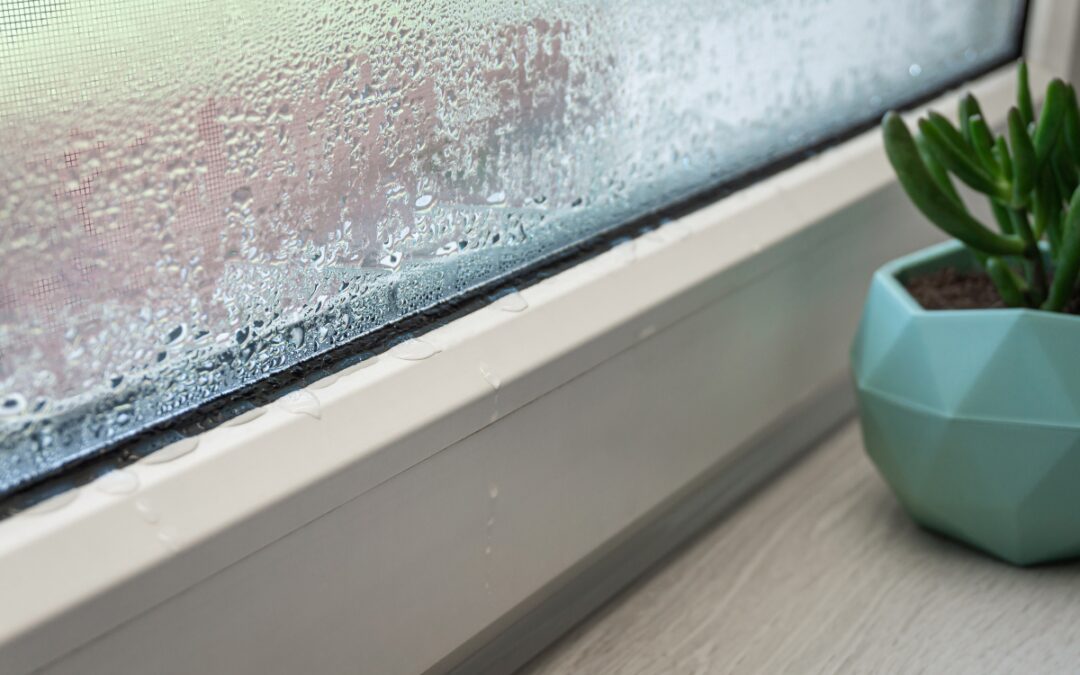
You wake up, look at the window, and it’s dripping. Not outside, but inside. The glass is soaked, the curtain’s damp, and there’s a little puddle forming on the sill.
Your RV isn’t leaking. It’s sweating, and the proper scientific word for that is condensation.
This happens a lot in Central Texas this time of year, and here’s why. Fall mornings around here can be thick and muggy, then a blue norther blows in and the temperature drops 20 or 30 degrees in an afternoon. Warm, wet air inside your rig meets cold walls and glass, and the water has nowhere to go but down your window. Same thing that happens to a cold glass of sweet tea on the porch.
Where the water comes from
Condensation is just water vapor turning back into water when it hits something cold. More than you’d think, two people sleeping in a closed-up rig breathe a lot of water into the air overnight. Burning propane also releases water into the air, and your stove does it right inside the living space. Hot showers, boiling pasta, a load of towels drying over the shower rod. All of it ends up in the air, and then on your windows.
Fixes that work
Run the vent fan while you cook and shower. Keep it going a few minutes after you finish, too. Most folks shut it off the second the pot comes off the stove, and that’s when the steam is still hanging around.
Crack a window or a roof vent, even on a chilly night. I know. Letting in cold air feels backwards. But a little airflow lets the damp air out, and a closed-up rig holds it in like a ziplock bag.
Get a dehumidifier. With full hookups you’ve got the power, so you’re not worrying about batteries. A small one runs quietly in the corner. If you’re on 30 amps and running a heater or the AC too, check the amp draw so you don’t pop a breaker. An inexpensive hygrometer reads your humidity; aim for somewhere between 30 and 50 percent.
Move the wet stuff out of the rig. Take your long, steamy showers in the park’s private shower suites instead of the one in your coach. Run your laundry in the laundry facility, not on a drying rack by the couch. That’s a lot less water floating around your living space.
Give your walls a little breathing room. Pull your mattress up and look at the wall side. A lot of people find damp spots or the start of mildew there, because the mattress sits against a cold outside wall with no air at all. Same goes for cushions and closets along outside walls. Leave a gap, or tuck in a mattress vent mat.
Insulate the windows, but keep air moving. Thermal curtains and foam inserts cut the cold surface that makes water form, but they can trap moisture behind them if the air sits still. A small fan helps.
Wipe it down in the morning. Boring, but it works. Mildew starts where water sits, so grab a towel and get the window sills before they do.
One thing to skip. Don’t heat your rig with the oven. Besides being a safety problem, it adds more water to the air. An electric space heater is drier than burning propane inside, if you’ve got the power for it. Just be sure to turn it off and unplug it before hitting the sheets for the night.
Fall in Bryan/College Station is a great time to be in an RV. Cool nights, warm afternoons, and a good football weekend if you can catch one. Keep the air moving, keep the windows dry, and when the norther rolls through and you’re ready for some quiet, you can rest your shells with us.